
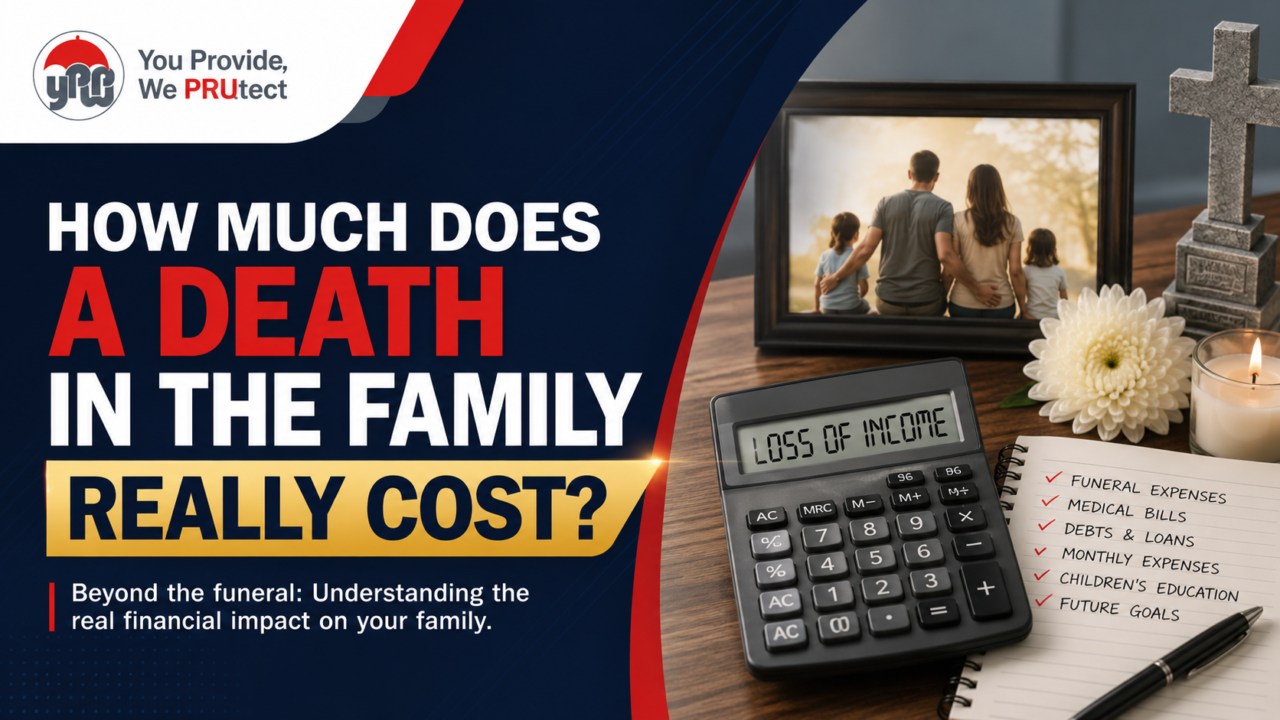
Death is something every family will eventually face, but the financial impact of losing a loved one is often something we don’t prepare for.
When someone dies, the family doesn’t only have to think about the funeral. There may be medical bills from the person’s final illness, funeral and burial expenses, outstanding debts, estate-related costs, and—perhaps most importantly—the loss of the income that the deceased used to provide.
So, how much can a death in the family really cost?
The answer depends on the family’s circumstances, but the financial impact can easily reach hundreds of thousands of pesos, especially when the deceased was a breadwinner.
1. The Immediate Funeral and Burial Expenses
The first financial challenge usually comes immediately.
Families may need to pay for:
- Funeral or memorial services
- Casket or urn
- Embalming and preparation
- Wake and viewing expenses
- Transportation of the deceased
- Cemetery or memorial lot
- Burial or interment fees
- Cremation expenses, if applicable
- Death certificates and other documents
- Flowers, food, and other wake-related expenses
- Religious or memorial services
These expenses vary significantly depending on the location, funeral provider, burial arrangement, and family’s preferences.
For example, one recent Philippine personal account documented expenses totaling roughly ₱295,000+, including funeral services, wake expenses, a memorial lot, interment, transportation, and miscellaneous costs. This is only one family’s experience—not a standard price—but it illustrates how quickly expenses can add up when a death happens unexpectedly.
And if the family does not already have a memorial lot or funeral plan, they may have to find the money immediately.
2. The Medical Bills May Not End When Life Does
Sometimes, death follows a long hospitalization or serious illness.
That means the family may already be dealing with:
- Hospital bills
- Doctor’s fees
- Medicines
- Laboratory and diagnostic expenses
- Rehabilitation or other treatment costs
- Unpaid medical balances
In other words, the family may be dealing with two financial events at the same time:
The cost of the final illness + the cost of the funeral.
This can be particularly difficult when the deceased was also the family’s primary source of income.
3. There May Be Debts and Financial Obligations
Death does not automatically make every financial obligation disappear.
Depending on the circumstances, the family may still need to deal with:
- Personal loans
- Credit card balances
- Car or housing payments
- Business obligations
- Other outstanding debts
- Household expenses that continue after the death
Some obligations may be settled from the deceased’s estate, while others may depend on the terms of the loan, insurance coverage, ownership arrangements, or applicable laws.
This is why financial planning should look beyond the funeral.
4.What About the Family’s Daily Expenses?
This is often the biggest financial impact of all.
Imagine a family where the father earns ₱60,000 a month and provides most of the household income.
If he suddenly passes away, the family doesn’t just lose a person.
They may also lose:
₱60,000 of monthly income.
That’s:
- ₱720,000 in one year
- ₱3.6 million over five years
- ₱7.2 million over ten years
And that’s assuming his income never increases.
The family may still need to pay for:
- Food
- Rent or mortgage
- Utilities
- Children’s education
- Transportation
- Healthcare
- Insurance premiums
- Household expenses
- Other financial commitments
This is why the financial cost of death can be much larger than the funeral bill.
The funeral may be a one-time expense.
The loss of income can continue for years.
5. The Cost of Education Can Continue Too
If the deceased is a parent, another question immediately arises:
Who will continue paying for the children’s education?
A child may still have several years of:
- Tuition
- School fees
- Books and supplies
- Transportation
- Allowances
- College expenses
For a family with young children, the financial responsibility may continue for 10, 15, or even 20 years.
This is one reason life insurance can be considered as part of an overall education and family protection plan.
The goal isn’t simply to leave money behind.
It’s to help make sure that the family’s plans don’t automatically stop because one income disappears.
So, How Much Should a Family Prepare?
There isn’t one universal amount.
A single person with no dependents will have very different financial responsibilities from a parent supporting three children.
A better approach is to ask:
What financial responsibilities would continue if I were no longer here?
Consider:
Immediate expenses
- Funeral and burial
- Medical bills
- Other urgent obligations
Short-term expenses
- Household bills
- Loans
- Immediate family needs
Long-term expenses
- Children’s education
- Housing
- Daily living expenses
- Retirement needs of a surviving spouse or parents
Future financial goals
- College education
- Starting a business
- Buying a home
- Other goals the family is working toward
The amount of life insurance coverage should then be considered alongside existing savings, investments, assets, employee benefits, and other sources of financial support.
Where Can Life Insurance Help?
This is where life insurance can play an important role in financial planning.
A life insurance policy can provide a death benefit to the policy’s beneficiaries, subject to the policy’s terms and conditions.
That money can potentially help the family with immediate expenses such as funeral and medical costs.
But more importantly, it can provide financial support for the responsibilities that continue after the person’s death.
For example, the benefit may help the family:
Pay immediate expenses
→ Funeral, burial, medical bills, and other urgent needs.
Replace lost income
→ Help provide financial support while the family adjusts to the loss of the breadwinner.
Continue paying for education
→ Help keep children’s educational plans on track.
Pay financial obligations
→ Help address outstanding debts or other responsibilities.
Maintain the family’s lifestyle
→ Give the surviving family members time and financial resources to adjust without having to make drastic decisions immediately.
The purpose isn’t to put a price on someone’s life.
It is to put a financial plan behind the people and responsibilities they leave behind.
What About Government Benefits?
Families may also be eligible for benefits from government programs depending on the deceased person’s eligibility.
For example, the Philippine Social Security System (SSS) provides a funeral benefit. As of October 20, 2023, the benefit ranges from ₱20,000 to ₱60,000 for qualified members or pensioners who meet the contribution requirement, while a fixed ₱12,000 applies to those with at least one but fewer than 36 contributions.
SSS may also provide death benefits to qualified beneficiaries.
These benefits can certainly help—but families should consider them as one part of the overall financial plan, rather than assuming they will cover every financial consequence of a death.
The Real Cost of Death Is More Than the Funeral
When we talk about preparing for death, it’s easy to focus on the funeral bill.
But imagine a family suddenly losing:
₱50,000/month × 10 years = ₱6 million
or
₱80,000/month × 10 years = ₱9.6 million
The numbers can become significant very quickly.
And that’s before considering inflation, children’s education, debts, medical expenses, and other financial goals.
That’s why financial protection shouldn’t only answer:
“How will we pay for the funeral?”
It should also answer:
“How will my family continue financially if my income is no longer there?”
Life Insurance Is About More Than Death
Life insurance is often associated with what happens when someone dies.
But from a financial planning perspective, it is really about preparing for what happens to the people who remain.
The goal is not to predict when death will happen.
The goal is to make sure that if the unexpected happens, your family’s financial plans don’t have to completely fall apart.
Because while we cannot prevent every loss, we can prepare for its financial consequences.
A Simple Question to Ask Yourself
If your income stopped tomorrow, how long could your family continue their current lifestyle using only their existing savings and assets?
One month? Six months? One year? Five years?
If the answer makes you uncomfortable, that may be a good reason to review your financial protection plan.
Life insurance is one option you can consider as part of that plan—alongside savings, investments, emergency funds, employee benefits, and other financial resources.
You can’t always control what happens tomorrow.
But you can prepare for the financial responsibilities that tomorrow may bring.
Note: Funeral and other death-related expenses vary widely depending on location, provider, services selected, and family circumstances. The figures above are illustrative rather than fixed Philippine prices. Insurance benefits are subject to the terms, conditions, exclusions, and limitations of the specific policy.