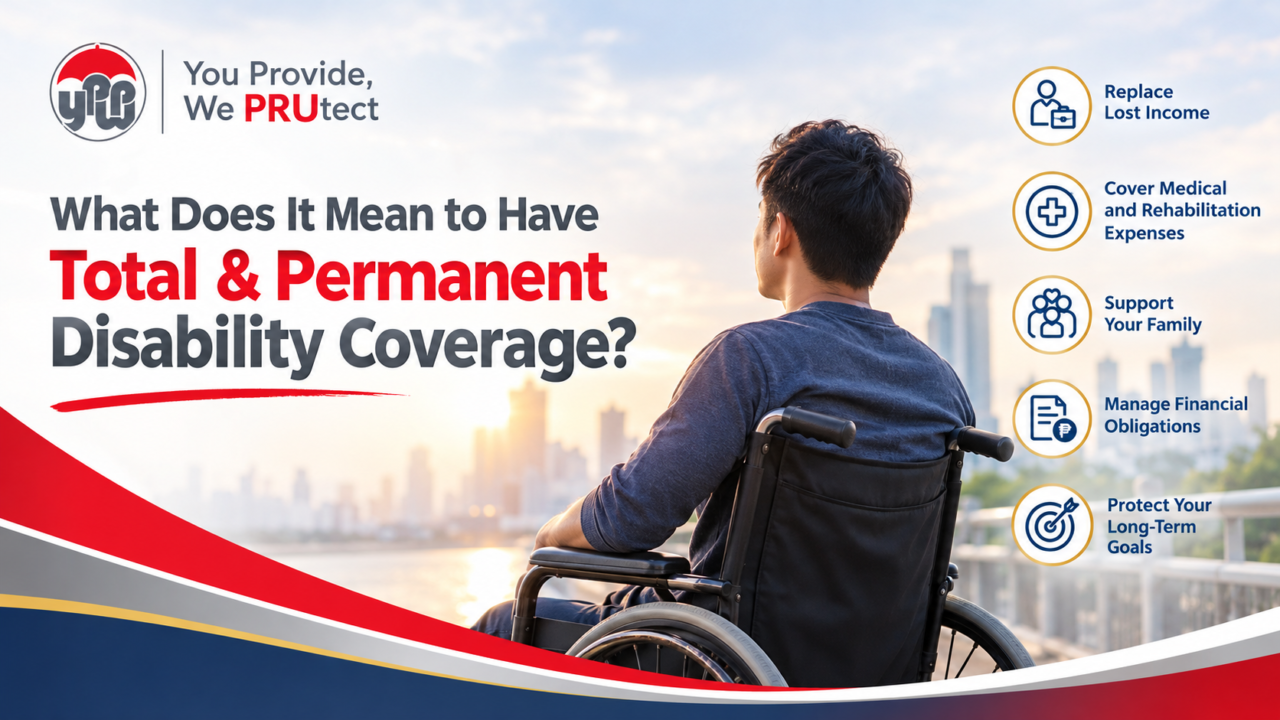
A serious accident or medical condition can affect more than your health. If it prevents you from working permanently, it can also affect your ability to earn an income, pay for daily expenses, support your family, and continue pursuing your financial goals.
This is where Total & Permanent Disability (TPD) coverage can play an important role in a financial protection plan.
But what exactly does TPD coverage mean? And why should you consider it when preparing for life’s unexpected events?
What Is Total & Permanent Disability?
Total & Permanent Disability generally refers to a disability that meets the policy’s definition of being total and permanent.
The exact definition varies depending on the insurance policy. Depending on the terms and conditions, it may involve circumstances where a person becomes permanently unable to work or perform certain activities because of an illness or injury.
This distinction is important because not every disability automatically qualifies for a TPD benefit.
Insurance policies have specific definitions, conditions, and requirements that determine when a claim may be payable. That’s why it is important to understand the actual terms of your policy rather than relying only on the name of the benefit.
Why Can Permanent Disability Be a Financial Problem?
When we think about financial protection, we often focus on what happens after death.
But what if you survive an accident or serious illness and are left permanently unable to work?
You may still have:
- Daily living expenses
- Household bills
- Loan or debt payments
- Medical and rehabilitation expenses
- Ongoing treatment or care
- Family responsibilities
- Children’s education expenses
- Long-term financial goals
At the same time, your ability to earn an income may be significantly reduced or even completely lost.
This creates a different financial challenge.
Death may end a person’s income, but permanent disability can potentially leave a person facing expenses without the same ability to earn.
What Does TPD Coverage Generally Provide?
If the insured person satisfies the policy’s definition and requirements for total and permanent disability, the policy may provide a lump-sum benefit.
The benefit can provide financial resources that may help the insured person and their family adjust to a major change in their financial situation.
Depending on their circumstances, the benefit could potentially be used for things such as:
1. Replacing Lost Income
If you can no longer work, one of the biggest financial concerns may be the loss of your regular income.
A lump-sum disability benefit can provide funds that may help compensate for some of the financial impact of losing your earning capacity.
2. Paying for Medical and Rehabilitation Expenses
A permanent disability may require ongoing treatment, rehabilitation, assistive equipment, or modifications to your living environment.
Having additional financial resources can help you manage these expenses.
3. Supporting Your Family
If you are one of the family’s income earners, your disability may affect everyone who depends on your income.
Financial protection can help your family continue meeting essential expenses while adjusting to the new circumstances.
4. Managing Existing Financial Obligations
Mortgages, loans, household expenses, and other financial commitments do not necessarily disappear when someone becomes disabled.
A disability benefit may provide funds that can be used to manage these obligations, subject to the policy terms and the person’s financial needs.
5. Protecting Your Long-Term Financial Plans
A permanent disability can potentially interrupt plans such as retirement, education funding, home ownership, or business plans.
Having disability protection may help preserve some financial flexibility when an unexpected event changes your ability to earn.
TPD Coverage Is Different From Life Insurance
One common misunderstanding is that life insurance only protects against death.
In reality, depending on the policy, life insurance may include living benefits, including benefits related to disability.
The important difference is the event that triggers the benefit.
Life insurance: generally provides a death benefit when the insured person dies, subject to the policy terms.
TPD coverage: may provide a benefit when the insured person meets the policy’s definition and requirements for total and permanent disability.
This means disability protection can address a financial risk that isn’t limited to what happens after death.
TPD Coverage Is Also Different From Critical Illness Coverage
TPD and critical illness coverage can sound similar because both can provide financial assistance while you are alive. However, they protect against different risks.
Critical illness coverage is generally triggered by the diagnosis of a covered critical illness, subject to the policy’s definitions and conditions.
TPD coverage is generally triggered when the insured person meets the policy’s definition of total and permanent disability.
For example, a person may be diagnosed with a serious illness but still be able to work. In that situation, a critical illness benefit may potentially apply if the illness meets the policy definition, while a TPD benefit may not.
On the other hand, a severe accident could result in a permanent disability without necessarily being a covered critical illness.
That’s why these benefits should not automatically be viewed as interchangeable.
“But I Already Have Health Insurance.”
Health insurance and disability coverage serve different purposes.
Health insurance is primarily designed to help address medical expenses covered by the plan.
TPD coverage addresses a different financial concern: what happens to your finances when a permanent disability affects your ability to earn or function as defined by the policy?
You could have your medical bills covered and still face another major financial challenge—the potential loss of income.
This is why financial protection can involve more than simply preparing for hospitalization or medical expenses.
“I Have Emergency Savings. Isn’t That Enough?”
An emergency fund is an important part of financial planning, but it may not be designed to replace years of lost income.
Imagine someone who normally earns a regular monthly income and suddenly becomes permanently unable to work.
Their emergency fund may help with immediate expenses, but a long-term disability could create financial needs that extend far beyond a typical emergency fund.
This is where insurance can complement savings.
Savings can help you handle emergencies. Insurance can help transfer certain large financial risks that may be difficult to absorb on your own.
Who Should Consider TPD Coverage?
TPD coverage can be worth considering for anyone whose financial stability depends significantly on their ability to earn an income.
This may include:
- Employees
- Business owners
- Self-employed individuals
- Professionals
- Parents and breadwinners
- Individuals with loans or major financial obligations
- People who are building their retirement fund
- Anyone whose financial plans depend on their future earning capacity
You don’t necessarily need to be the sole breadwinner to face financial consequences from a permanent disability.
Even if you live independently, your income supports your lifestyle, savings, investments, and future plans.
The Bigger Picture: Protecting Your Ability to Earn
When planning for the future, we often focus on what we own:
Savings. Investments. Property. Retirement funds.
But there is another valuable asset that can easily be overlooked:
your ability to earn an income.
For many people, their future income represents a significant portion of their lifetime financial resources.
Protecting that earning capacity can therefore be an important part of financial planning.
What Should You Check Before Getting TPD Coverage?
Before purchasing or relying on TPD coverage, don’t simply look at the amount of the benefit.
Take time to understand:
- How does the policy define “total and permanent disability”?
- What conditions qualify?
- What exclusions apply?
- How is a claim assessed?
- When is the benefit payable?
- How much coverage do you actually need?
- Is the coverage sufficient for your financial obligations?
- Does your existing insurance already provide a similar benefit?
Most importantly, read the policy terms and conditions.
The exact definition and claim requirements can differ between insurance products, so a general explanation should never replace understanding the specific policy you are considering.
Final Thoughts
We cannot predict whether an accident, illness, or disability will happen in our lifetime.
But we can prepare for the financial consequences of events that could significantly change our ability to earn.
Total & Permanent Disability coverage is not about expecting something bad to happen. It’s about recognizing that your ability to earn is an important financial asset—and considering how you would protect yourself if that ability were permanently affected.
Life insurance can help protect your loved ones if you die. Critical illness coverage can help provide financial support if you are diagnosed with a covered serious illness. And TPD coverage can help address the financial impact of a qualifying permanent disability.
Ultimately, the goal is not simply to have insurance.
The goal is to have the right financial protection for the risks that could significantly affect your life and your financial plans.