
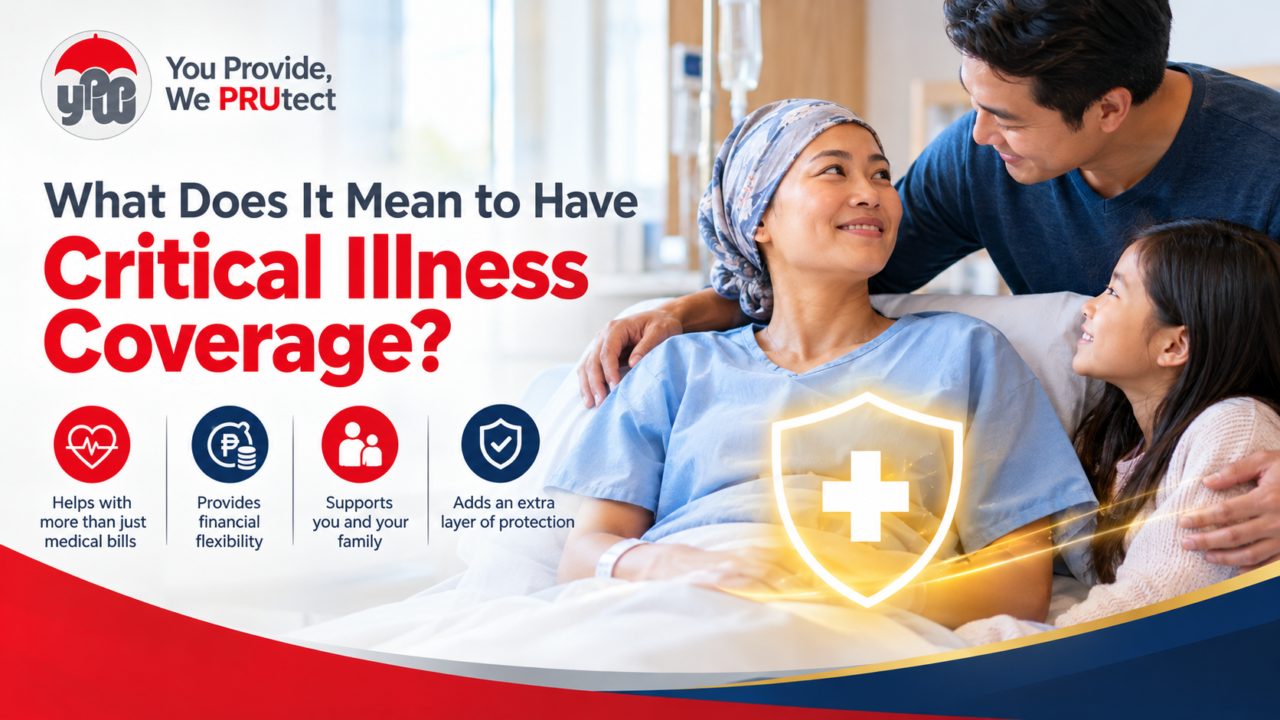
When we think about preparing for the future, we often think about saving money, building an emergency fund, or getting life insurance. But there is another financial risk that is easy to overlook: what happens if you are diagnosed with a critical illness?
A serious illness does not only affect your health. It can also affect your ability to work, your income, your savings, and your family’s finances.
This is where critical illness coverage can play an important role.
But what exactly does it mean to have critical illness coverage, and how is it different from regular medical or health insurance?
What Is Critical Illness Coverage?
Critical illness coverage is a type of insurance benefit that provides a cash benefit when the insured is diagnosed with a covered critical illness and meets the policy’s definition and requirements.
Depending on the policy, covered conditions may include illnesses such as cancer, heart attack, stroke, and other serious medical conditions.
The important thing to understand is that the benefit is generally not simply reimbursement for your hospital or medical bills.
Instead, the benefit can provide you with cash that you may use according to your financial needs, subject to the terms and conditions of your policy.
For example, if you are diagnosed with a covered illness, the benefit could help you manage expenses such as:
- Medical and treatment-related expenses
- Transportation and other costs associated with treatment
- Household expenses while you recover
- Loan or debt payments
- Lost income if you are unable to work
- Additional caregiving or support expenses
- Other financial obligations that continue even while you are recovering
This flexibility is one of the important roles critical illness coverage can play in a financial protection plan.
Why Is Critical Illness Coverage Important?
One of the biggest financial risks of a serious illness is not necessarily the hospital bill alone.
It is the combination of expenses and possible loss of income.
Imagine being diagnosed with a serious illness and needing months of treatment or recovery. At the same time, you may have regular financial commitments such as:
- Mortgage or housing payments
- Car or personal loans
- Utilities
- Groceries
- Education expenses
- Family support
- Business or other financial commitments
Your expenses may continue even when your ability to earn income is temporarily reduced.
This is why preparing only for medical expenses may not be enough.
Critical illness coverage can provide an additional layer of financial protection during a major health event.
Critical Illness Coverage Is Not the Same as Medical Insurance
This is an important distinction.
Medical or health insurance is generally designed to help cover eligible medical expenses, depending on the plan.
Critical illness coverage, on the other hand, can provide a lump-sum cash benefit when a covered critical illness occurs and the policy conditions are met.
For example, suppose someone is diagnosed with a covered critical illness.
A medical insurance plan may help pay for eligible hospital or treatment expenses.
A critical illness benefit may provide cash that can help address other financial needs during the same period.
In other words:
Medical coverage helps address healthcare costs.
Critical illness coverage can help address the broader financial impact of a serious illness.
They can serve different purposes and may complement each other.
What Can You Do With the Benefit?
One of the advantages of a cash benefit is flexibility.
If your policy provides a critical illness benefit after a qualifying diagnosis, you may use the proceeds based on your financial situation and the policy’s terms.
For one person, the priority may be treatment-related expenses.
For another, it may be replacing income while taking time away from work.
Someone else may need to continue paying household bills or supporting their family.
The point is that a serious illness can create financial needs beyond the medical bill, and having cash available can give you more options during a difficult period.
Does Critical Illness Coverage Mean Every Serious Illness Is Covered?
No.
This is one of the most important things to understand before getting any critical illness coverage.
A policy does not necessarily cover every illness or every stage of a disease.
The policy will specify:
- Which critical illnesses are covered
- The definitions of those illnesses
- The severity or stage required
- Waiting or survival periods, if applicable
- Exclusions and limitations
- The amount of benefit available
- Other conditions that must be satisfied before a claim can be paid
For this reason, it is important to read and understand the actual policy provisions, rather than assuming that any diagnosis automatically qualifies for a benefit.
How Much Critical Illness Coverage Do You Need?
There is no single amount that is appropriate for everyone.
Your coverage needs may depend on factors such as:
- Your current income
- Your monthly expenses
- Your emergency savings
- Your existing health or medical coverage
- Your debts and financial obligations
- The number of people who depend on your income
- Your expected recovery period
- Your ability to continue working during treatment
A useful way to start is to ask:
“If I were diagnosed with a serious illness today, how much money would I need to keep my finances running while I recover?”
That question can help you look beyond the cost of hospitalization and consider the bigger financial picture.
Critical Illness Coverage Is About More Than the Illness
Nobody plans to get critically ill.
But financial planning is not about predicting exactly what will happen. It is about preparing for events that could significantly affect your financial life.
A critical illness can bring medical decisions, lifestyle changes, time away from work, and financial responsibilities all at once.
Having appropriate critical illness coverage can help reduce some of the financial pressure that comes with that situation.
It does not prevent illness.
It does not replace medical insurance.
And it cannot remove the emotional challenges of facing a serious diagnosis.
But it can provide financial resources when you may need them most.
The Bottom Line
Critical illness coverage is essentially about preparing financially for the possibility of a serious health event.
It provides a potential source of cash when a covered critical illness occurs, helping you manage not only healthcare-related expenses but also the other financial responsibilities that may continue while you recover.
The right coverage will depend on your health protection, income, savings, financial responsibilities, and overall financial plan.
Because preparing for a critical illness isn’t just about asking, “How will I pay for treatment?”
It is also about asking:
“How will I keep my financial life going while I recover?”
That is the role critical illness coverage can help address.